Cocoa Auditorium and the 1950s civic-building era
The Cocoa Auditorium and the related civic-building boom of the late 1940s and 1950s gave the city a set of public buildings it still uses. Most were demolished or repurposed by 2000, but the era's footprint is still visible in Riverfront Park and around city hall.
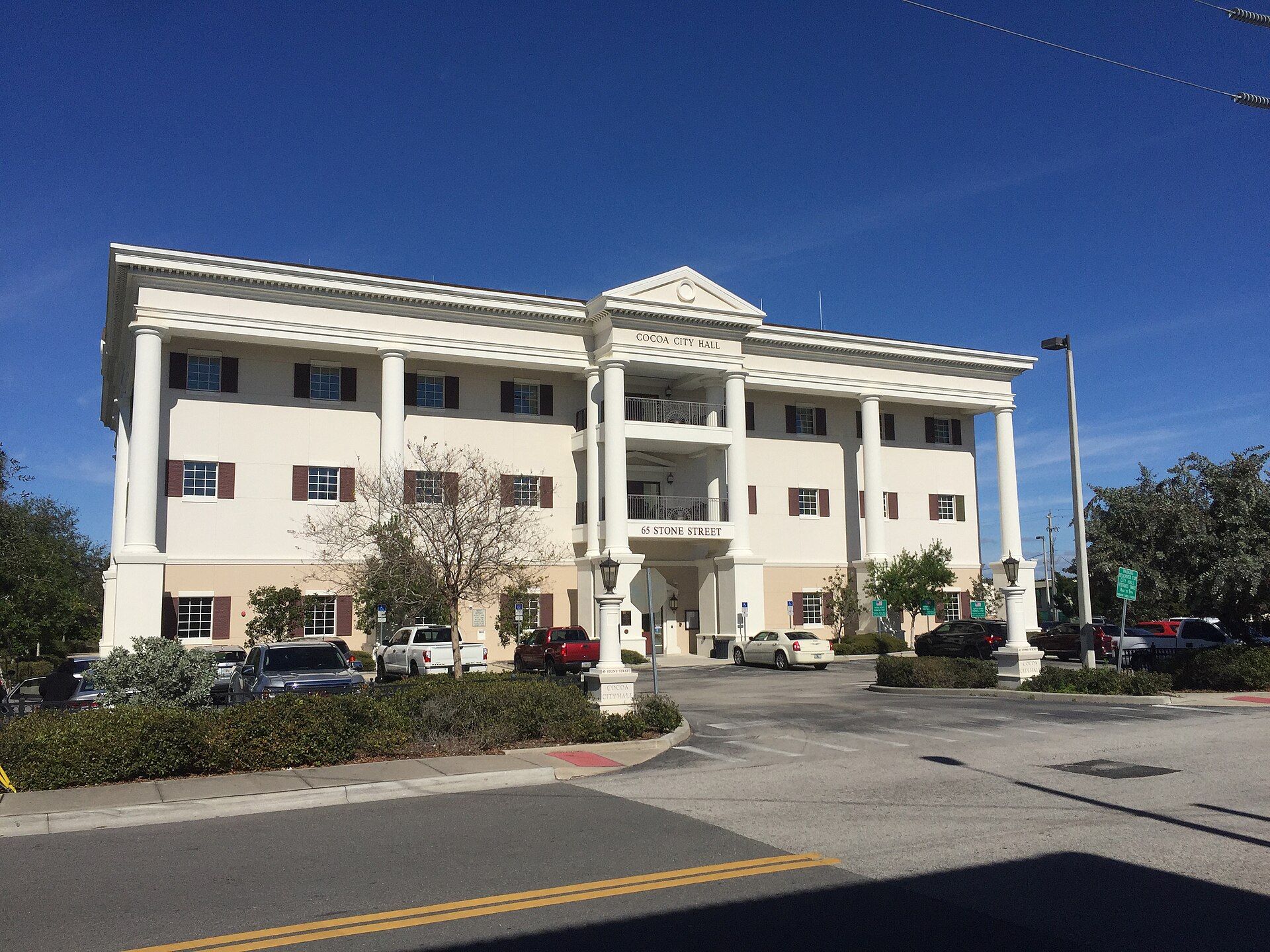
Between 1939 and 1958, the City of Cocoa built or substantially expanded a half-dozen public buildings that defined the city’s civic infrastructure for the next half-century. The 1939 City Hall on Florida Avenue, the 1948 Cocoa Auditorium near the lagoon, the 1950 Brevard County Library Cocoa branch, the 1953 Cocoa Memorial Hospital, the 1956 swimming pool complex, and the 1958 Cocoa Beach Causeway widening together represented the most concentrated civic-construction era in the city’s history.
Most of these are gone now. The 1948 auditorium was demolished in 1989. The 1953 hospital evolved into the current Cape Canaveral Hospital complex through multiple expansions. The 1939 City Hall is still standing but has been substantially remodeled. The era’s footprint is mostly visible today in Riverfront Park (its own piece) and in the surviving brick civic buildings clustered along Florida Avenue.
The era’s context
Cocoa in 1939 was a city of about 3,200, still working its way out of the Great Depression, still organized around a citrus economy that the 1925 land bust had hurt but not destroyed. The civic infrastructure was inadequate. City government operated from rented commercial space. The library was housed in a private building. There was no dedicated public auditorium; community events used the Aladdin Theatre or the school gymnasium.
By 1958, Cocoa had become a city of approximately 16,000. The NASA buildout was beginning to reshape Brevard County’s demographics. The civic infrastructure had to grow to match. The 1939-1958 building program was the response.
Federal money played a role. The 1939 City Hall was partially funded by Public Works Administration grants. The 1948 auditorium drew on post-war public-construction federal cost-sharing. The 1953 hospital used Hill-Burton Act federal grants for community hospitals. The 1956 swimming-pool complex was partly funded by Florida state recreation grants.
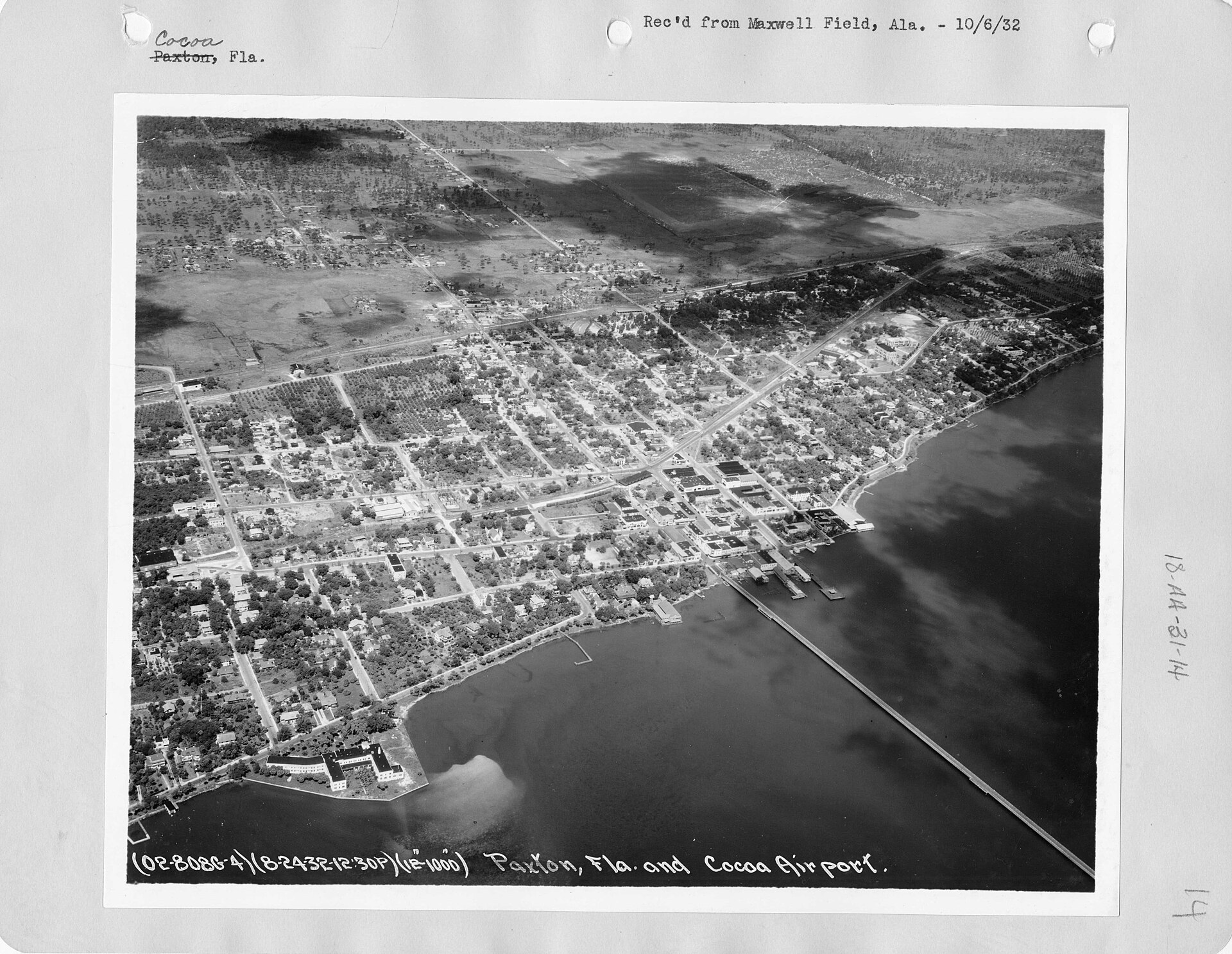
The 1939 City Hall
The 1939 City Hall building on Florida Avenue is one of the few surviving structures from the civic-building era. It was built in the simplified Art Deco / WPA Moderne style common in 1930s American public buildings, flat roof, smooth stucco exterior, simple geometric ornamentation around the entrance. Architect: Henry McKenna of Orlando.
The building was the home of Cocoa city government from 1939 through several major renovations. It still functions as part of the current city hall complex, though significant additions in 1965, 1985, and 2005 have changed the original building’s relationship to the rest of the complex.
The 1939 cornerstone is visible at the building’s southeast corner, dated and naming the construction commission. Several original interior features survive, the terrazzo flooring in the lobby, the original woodwork of the council chamber, and the painted ceiling medallions in the meeting room.
The 1948 Cocoa Auditorium
The Cocoa Auditorium, also called the Cocoa Civic Center in some periods, opened in March 1948 on a lagoon-front site at the south end of what is now Riverfront Park. It was a single-purpose performance hall seating approximately 1,400, with a small stage, dressing rooms, and limited backstage. The building used a Modernist concrete-shell roof structure that was technically progressive for 1948 small-city construction.
The auditorium hosted:
- Civic events: city council meetings (until council chambers moved to City Hall additions in the 1960s), high school graduations, public lectures.
- Cultural events: touring orchestras, opera companies, community theater productions, dance recitals.
- Political events: gubernatorial campaigns, congressional speeches, school-board meetings.
- Religious events: revival meetings, denominational conferences.
- Sports: Golden Gloves boxing exhibitions, professional wrestling matches.
- Movies: occasional first-run films and second-run programs throughout the late 1950s and 1960s, supplementing the Aladdin Theatre.
The auditorium was demolished in 1989. The site became part of the expanded Riverfront Park. The demolition was controversial, preservation advocates argued the building was architecturally significant and historically important, but the structure had deteriorated through the 1970s and 1980s and the city judged renovation too costly. The Aladdin Theatre’s reopening the same year (1991) absorbed some of the cultural functions that the auditorium had provided.
The 1950 library
The Brevard County Free Public Library system’s Cocoa branch opened in 1950 in a small brick building on Florida Avenue, the first dedicated public library in mainland Cocoa. The 1950 library has been replaced, the current Cocoa Public Library is a 1990s structure at a different site, but the original brick library building still stands and has been adapted for office use.
The 1950 library’s collection was modest: roughly 5,000 books at opening, growing to perhaps 15,000 by 1965. Brevard County’s library system was, by mid-century standards, late to develop; many comparable Florida counties had established library systems by the 1920s.
The 1953 hospital
Cocoa Memorial Hospital opened in 1953 as a 30-bed community hospital, founded with Hill-Burton Act federal funding plus local fundraising. It was the first dedicated hospital in mainland Brevard County. Previous medical care had relied on the Indian River Hospital in Titusville or private practice.
The hospital expanded several times, 1959, 1968, 1979, 1995, and most recently as part of the Cape Canaveral Hospital / Health First system consolidation. The 1953 building is mostly absorbed into the current complex; some original sections may survive as interior wings of the current campus.
The 1956 swimming pool
The Cocoa municipal swimming pool opened in 1956 on Florida Avenue, the city’s first public swimming facility. The pool was racially segregated at opening, like all Brevard County public facilities of the era. Integration came in 1963 under municipal-level action following federal civil-rights pressure.
The pool has been replaced, the current Cocoa Riverfront Pool is a newer facility, but the original 1956 site remained in service for several decades.
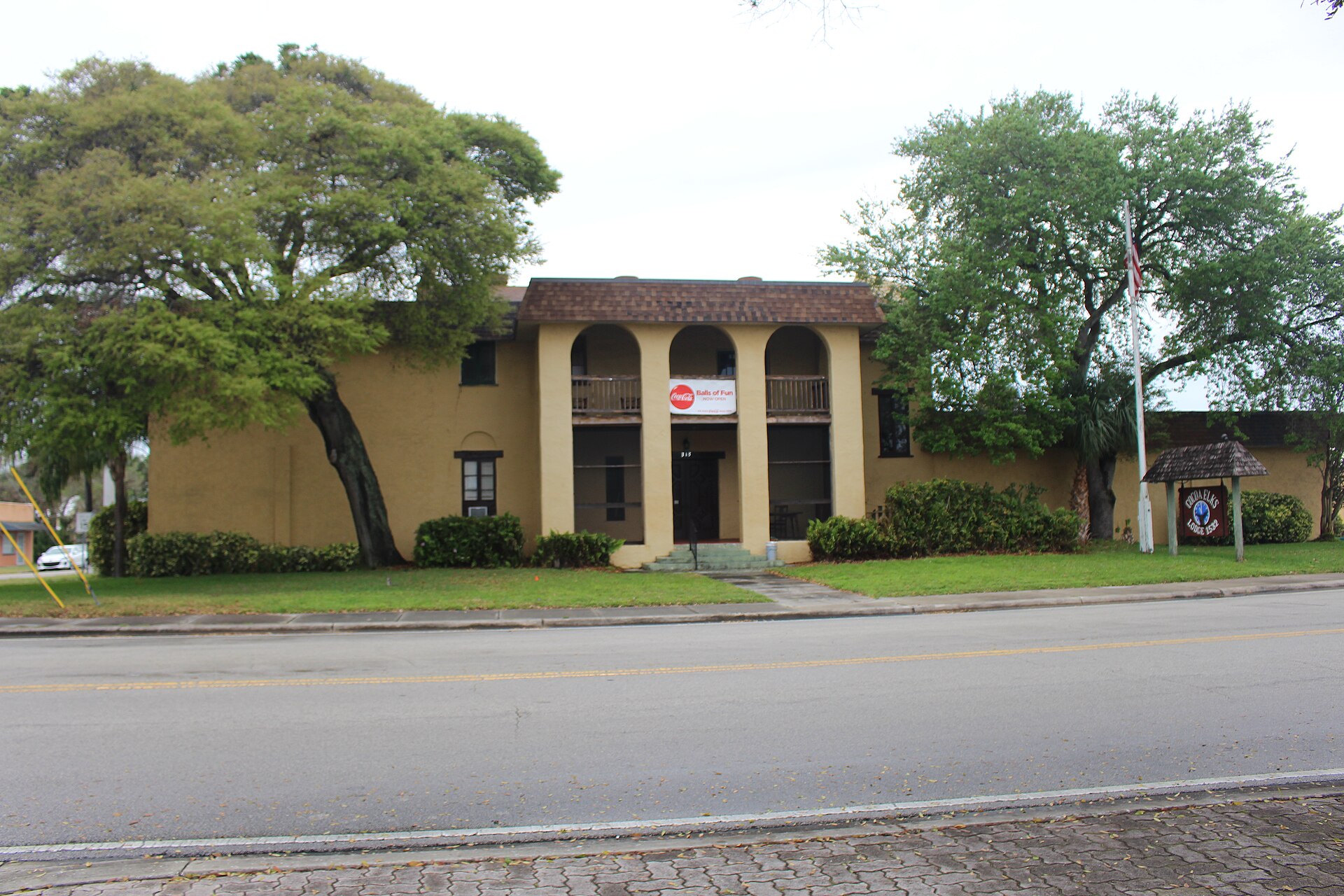
What the era built that’s still standing
- 1939 City Hall (with modifications). Florida Avenue.
- 1950 library building (adapted to office use). Florida Avenue.
- Portions of the 1953 hospital (absorbed into Cape Canaveral / Health First complex).
- The Riverfront Park footprint (the 1948 auditorium site, now part of the expanded park).
What’s gone
- 1948 Cocoa Auditorium (demolished 1989).
- 1956 original swimming pool (replaced).
- Various smaller civic outbuildings.
The era’s brick-and-concrete civic vernacular is mostly absent from modern Cocoa civic construction. The architecture of the 1990s and 2000s civic buildings, the Cocoa Police headquarters, the modern library, the Riverfront Park amenities, uses different materials and a more contemporary idiom. The 1939-1958 era was a coherent design period in Cocoa civic construction; nothing since has been as coherent.
What the era tells you about post-war Cocoa
The 1939-1958 civic-construction wave is the institutional response to the post-war population growth and the early NASA-era expansion. The city was preparing for a future it could see coming. Some of the bets were good (the City Hall site survived; the library footprint is still useful). Some were less good (the auditorium proved structurally problematic; the hospital had to be replaced piecemeal).
The era also represents a particular American mid-century confidence in public-building construction that has not been replicated. Cocoa, like most American cities, doesn’t build civic monuments anymore. The civic-construction footprint visible in 1958 is roughly the civic-construction footprint visible in 2026, with renovations and replacements but few wholly new buildings.
Further Reading
Sources
- City of Cocoa, official records on civic-building construction, 1939-1958.
- Brevard County Clerk of Court, construction contracts and bond issuance records.
- Cocoa Tribune, 1939-1960 civic-building coverage (microfilm via Brevard County Library System).
- Federal Hill-Burton Act records on Florida community hospital funding, 1947-1965.
- Public Works Administration project records, Florida construction projects, 1933-1942.
- Cape Canaveral Hospital / Health First institutional history.
- Brevard County Public Library System, founding documents.
- Florida Master Site File, Brevard County civic-construction inventory.
As an Amazon Associate we earn from qualifying purchases.