Cocoa Riverfront Park: the lagoon-front the city saved from itself
Today's Cocoa Riverfront Park sits where the city's 19th-century commercial waterfront, fish houses, and steamboat wharves once stood. The park dates from the 1960s; its survival depended on the city deciding not to sell off the lagoon shoreline.
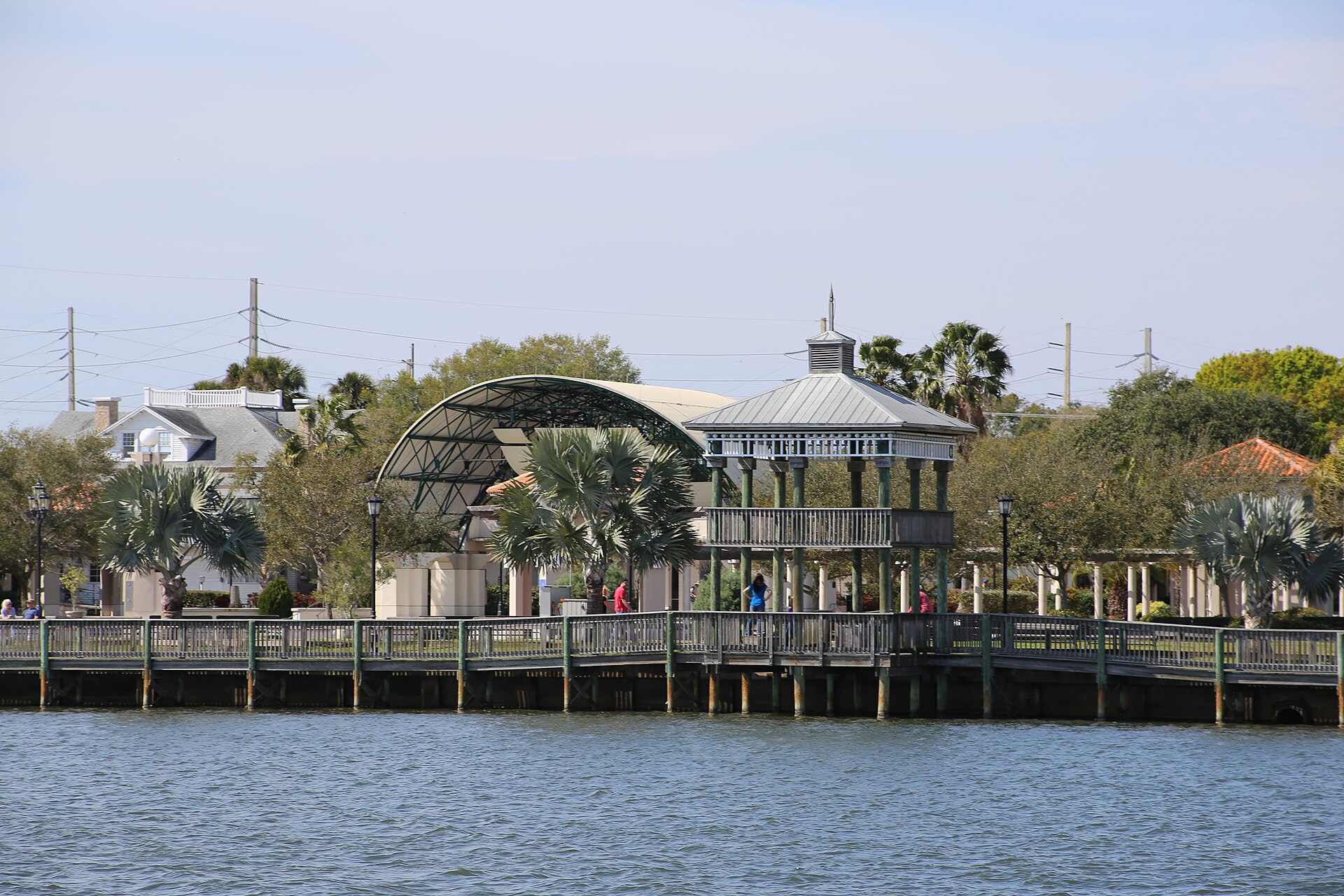
Cocoa Riverfront Park is the public lagoon-front in downtown Cocoa, running roughly a half-mile along the Indian River from Stone Street north to King Street. It contains the city’s main public dock, a band shell, the foundations of what was the 1948 Cocoa Auditorium, the Florida Historical Society Brevard chapter office, and a series of small commemorative monuments. It hosts the annual Friday Fest, the Cocoa Village Spring Art Festival, and most of the city’s organized waterfront events.
The park exists because in the late 1950s and early 1960s, when Florida coastal cities across the state were selling off their downtown waterfronts to private developers, Cocoa instead bought back the parcels and consolidated them into a public park. The decision was not unanimous. Several city commission votes in 1958, 1962, and 1966 were close. The park survived because a handful of elected officials and one or two preservation-minded business owners pushed back against selling the lagoon shoreline.
What was on the site before 1960
In 1900 the Cocoa lagoon-front was the city’s commercial heart. The Cocoa wharf at the foot of King Street was where the Indian River steamboats called. The fish houses along Stone Street processed mullet and trout for shipment. The Cocoa Citrus Exchange’s southern packing facility was on the lagoon-front. The principal commercial buildings of Cocoa faced east toward the water, not west toward the FEC Railway.
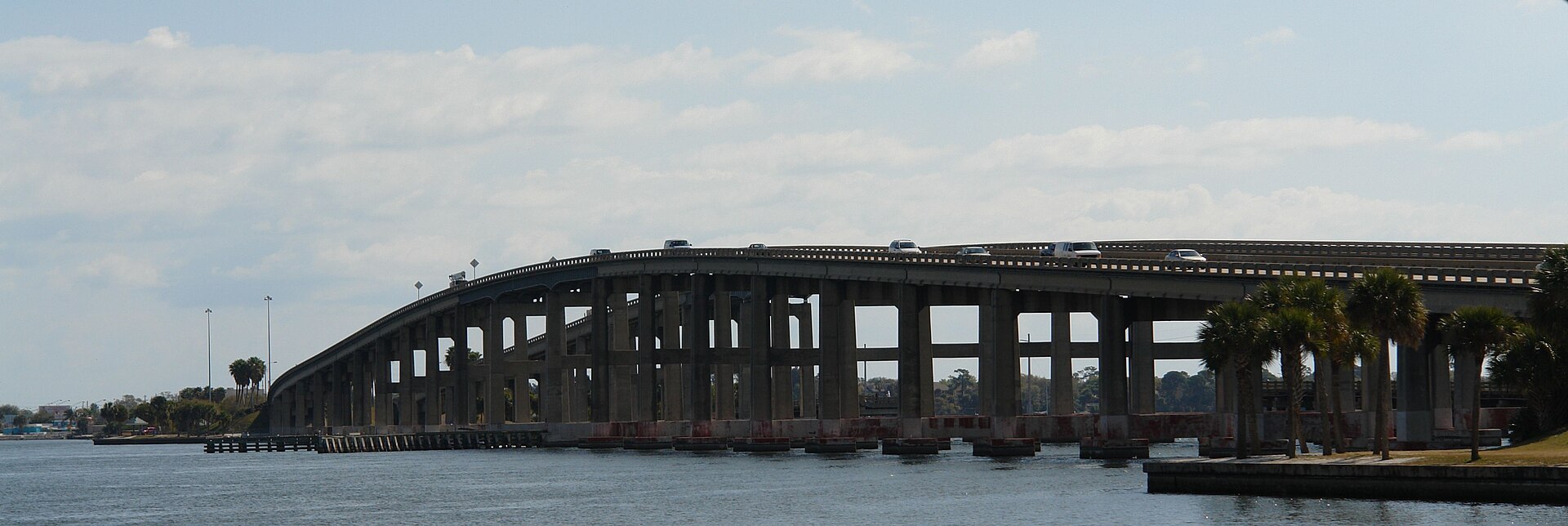
By 1940 most of the commercial waterfront was in decline. The steamboat traffic had ended in the 1920s. The commercial fishing had largely moved to smaller operations or had relocated south to Sebastian and Stuart. The 1917 bridge and the Cocoa-Cocoa Beach causeway era had reoriented the city’s traffic flow away from the lagoon-front.
Through the 1940s and early 1950s, the lagoon-front parcels were a mix of disused commercial buildings, several small fish-processing operations still running on a reduced scale, and vacant lots used by the city for storage and informal recreation.
The 1958-1966 acquisition
Beginning in 1958, the Cocoa City Commission acquired parcels along the lagoon-front piecemeal. The largest acquisition was the former Cocoa Citrus Exchange site in 1962, purchased for approximately $85,000. The city issued bonds in 1958 and 1962 to fund the acquisitions.
The political fight: a faction on the city commission, supported by several downtown merchants, argued that the lagoon-front parcels should be redeveloped as commercial space, restaurants, retail, perhaps a hotel, to generate property-tax revenue. The opposing faction, led by Commissioner Margaret Caudill (one of the first women elected to the Cocoa City Commission, served 1958-1966) argued that the lagoon-front should be public space. Caudill’s faction won three close votes between 1958 and 1962.
By 1966 the city had assembled most of the current park footprint. Improvements began in the late 1960s, a public dock, picnic shelters, the band shell, a small playground, and continued in stages through the 1970s and 1980s.
The 1948 Cocoa Auditorium, which was on the southern edge of the park footprint, was incorporated into the park’s programming through the 1970s and 1980s. The auditorium’s 1989 demolition opened additional park space at the southern end.
The 1980s expansion
Between 1985 and 1992, Riverfront Park was substantially expanded and improved. The expansions included:
- A larger central plaza.
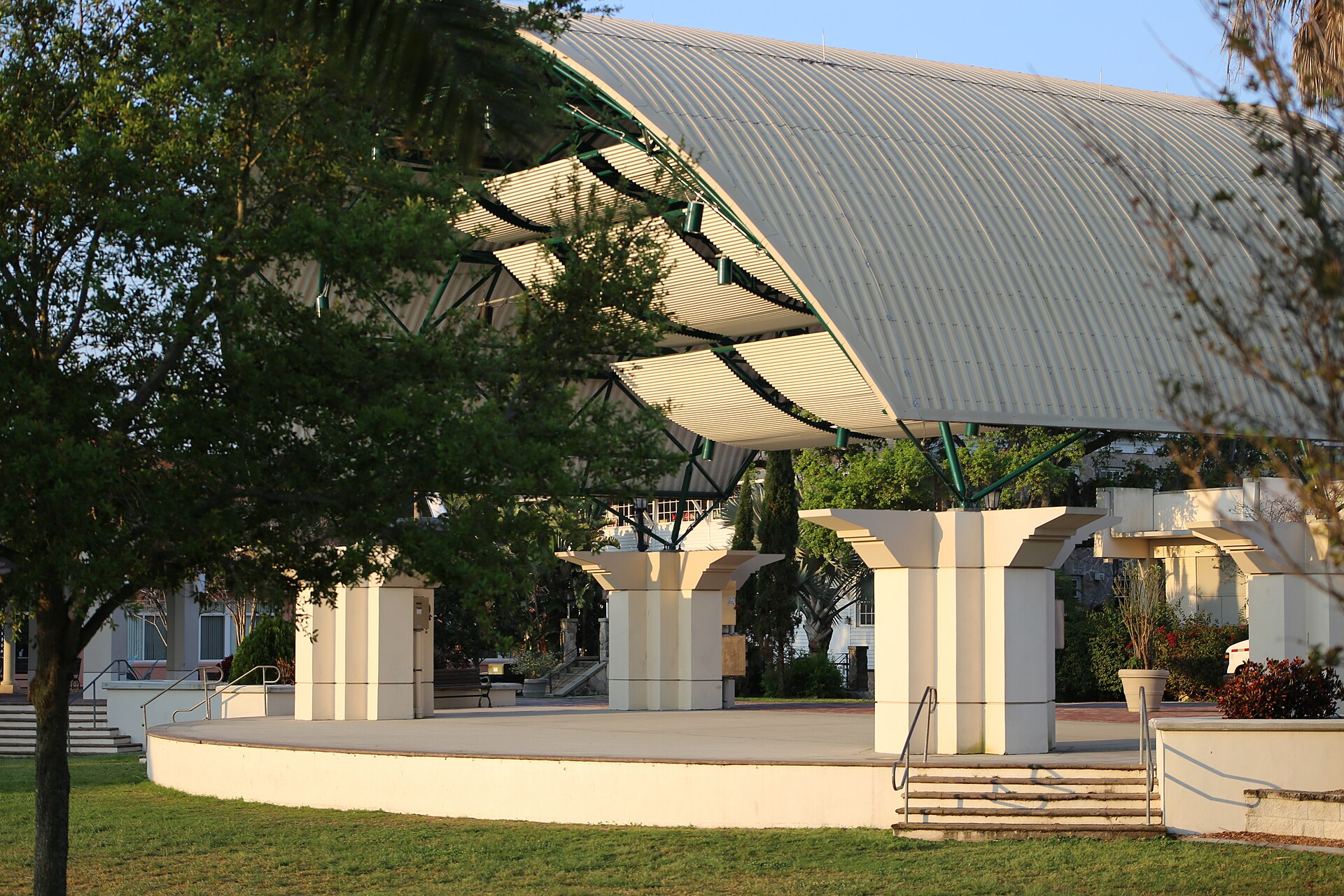
- A new band shell replacing the 1960s structure.
- Landscaped walking paths along the lagoon edge.
- A boat dock with public moorage.
- The Florida Historical Society Brevard chapter office (in a renovated 1920s building incorporated into the park).
- Commemorative monuments, to Brevard County war veterans, to local civic figures, to the founders of the city.
The 1985-1992 work coincided with the Cocoa Village commercial revival, the park’s improvement and the downtown’s economic recovery reinforced each other.
What happens at the park today
The park hosts several recurring events:
Friday Fest. Monthly evening concert and food-truck event, the principal community-gathering event for downtown Cocoa. Has run continuously since the early 2000s.
Cocoa Village Spring Art Festival. Annual juried art show, held in the park and the adjacent streets, draws regional attendance.
Holiday tree lighting. December event, traditional municipal Christmas tree lighting on the band shell stage.
Boating events. The Indian River Boat Parade (December), the various lagoon-fishing tournaments, and recreational boat traffic anchor weekend use.
Informal use. Joggers, dog walkers, families, fishing from the public pier. The park serves as the de-facto downtown public space for both Cocoa residents and visitors.
What the park did for Cocoa Village
Riverfront Park is part of what made the Cocoa Village historic district economically viable through the 1990s and 2000s. The combination of preserved historic commercial buildings on Brevard Avenue and an attractive public waterfront on the lagoon side is the basic appeal of the village as a regional destination.
Without the park, the historic district would still exist as architecture but would offer less reason for visitors to spend extended time. The park provides the gathering space, the event venues, and the lagoon access that turns a walking tour of historic buildings into an afternoon-long visit.
This is the kind of public-asset compounding that depends on decisions made decades earlier. The 1958-1966 acquisition decisions, the 1985-1992 improvements, and the 2000s programming all built on each other. If any one of those decisions had gone the other way, the park would be a less effective civic asset today.
What’s missing
Riverfront Park does not include any structures that predate the 1960s. The historic commercial waterfront, the wharves, the fish houses, the original Citrus Exchange packing buildings, is entirely gone. There is no preserved 1900-era waterfront structure in Cocoa. The closest analogue is the historic Cocoa Village commercial district one block west, which preserves the buildings that faced the lagoon-front but not the lagoon-front buildings themselves.
The pre-park waterfront is documented in Florida Memory photographs and in Cocoa Tribune coverage going back to the 1910s. The Florida Historical Society Brevard chapter, which has its office in the park, maintains some of the documentary record. A more complete historical interpretation, interpretive markers, an interpretive plaza, a museum component, has been discussed periodically but has not been built.
What the park costs and what it earns
Cocoa Riverfront Park is a city-operated public park with no admission charges. Annual operating costs are modest, primarily landscape maintenance, dock and pier upkeep, programming staff, special-event support. The city’s parks-and-recreation budget covers it.
The park does not directly generate revenue, but it generates indirect economic activity through downtown commercial spending during park events. Florida Today coverage of Friday Fest and the Art Festival has documented per-event economic impact in the high six figures for the largest events. The park is, by any reasonable accounting, a profitable investment for the city when downtown commercial-tax revenue is considered.
Further Reading
- The Gulf: The Making of an American Sea by Jack E. Davis
- Florida Manatees: Biology, Behavior, and Conservation by John E. Reynolds III
- Florida’s Fabulous Natural Places by Tim Ohr
Sources
- City of Cocoa, parcel acquisition records and city commission minutes, 1958-1966 (available through the city clerk’s office).
- City of Cocoa parks-and-recreation records.
- Cocoa Tribune and Florida Today, Riverfront Park coverage 1960-present.
- Florida Historical Society, Brevard chapter records.
- Brevard County Clerk of Court, deed records for the assembled park parcels.
- Cocoa Village Mainstreet organization, event records and economic-impact analyses.
- Brevard County Property Appraiser, current parcel data for the park.
As an Amazon Associate we earn from qualifying purchases.