Cocoa Village Historic District: what's listed, why it survived, and what the 1986 NRHP filing covers
The Cocoa Village Historic District was added to the National Register of Historic Places on June 5, 1986, covering 32 contributing structures across roughly 12 city blocks. It survived urban renewal because preservation activism started in the 1970s, not the 1990s.
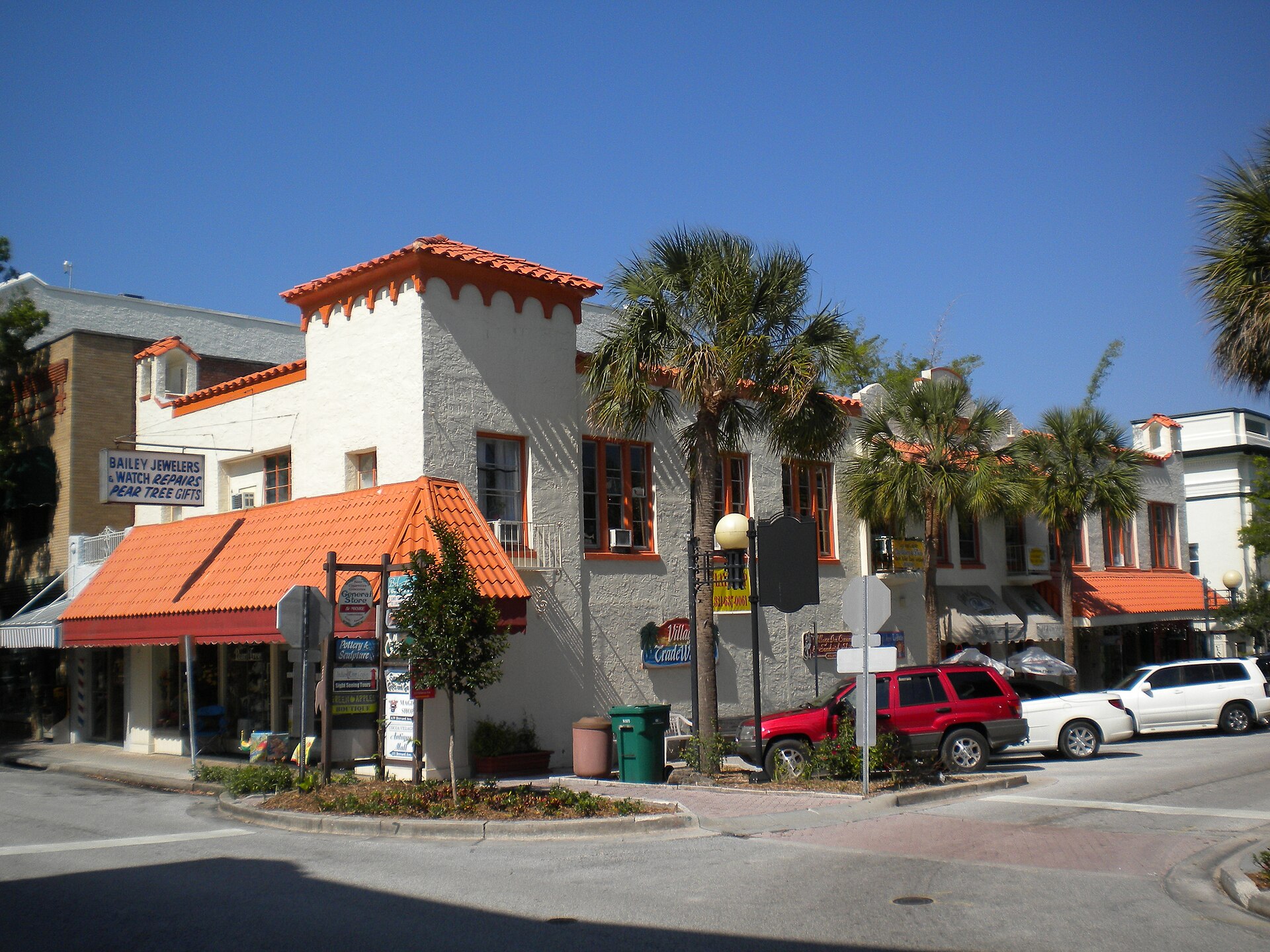
The Cocoa Village Historic District was added to the National Register of Historic Places on June 5, 1986, under NRHP reference 86001245. The district covers approximately 12 city blocks centered on Brevard Avenue and includes 32 contributing structures plus several individually-listed properties. It survived not because Cocoa is unusually old (it isn’t, by Florida standards) but because preservation activism started in the early 1970s, ten years before most Florida cities woke up to the value of their downtowns.
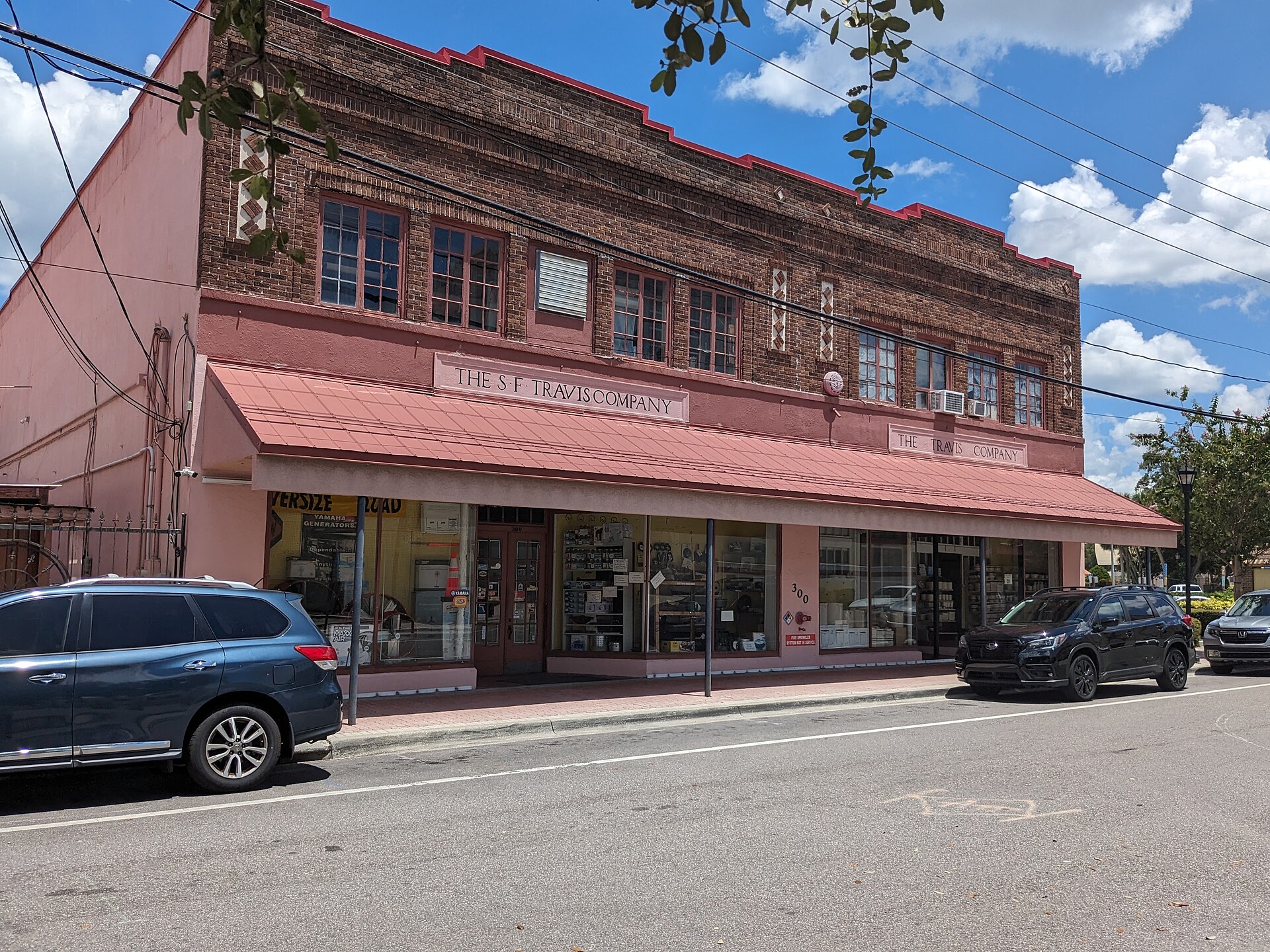
Today the district is the principal tourist asset of mainland Cocoa, anchored by S.F. Travis Hardware (1885), the Aladdin Theatre (1924), and the Porcher House (1916). The 1986 listing locked in design protections that have prevented the kind of speculative tear-down that flattened comparable historic downtowns in Titusville, Eau Gallie, and Fort Pierce.
What “historic district” actually means
A National Register Historic District is a federally-recognized concentration of historic buildings significant for their architecture, history, or association with important events or people. NRHP listing does not by itself prevent demolition, that’s a common misunderstanding, but it does:
- Make the district eligible for federal historic preservation tax credits when contributing buildings are rehabilitated to Secretary of the Interior standards.
- Trigger Section 106 federal historic-preservation review for any federally-funded or federally-permitted projects affecting the district.
- Establish a documentary baseline of what existed at listing date, which is useful for later local-level preservation regulations.
For Cocoa Village, the 1986 NRHP listing was paired with the City of Cocoa’s adoption of local historic-district zoning in 1988, which is what actually prevents private demolition of contributing structures without city approval. The combination, federal recognition plus local zoning, is the protective framework.
What’s in the district
The 1986 nomination form lists 32 contributing structures. The principal ones include:
S.F. Travis Hardware (1915 building). Its own piece. Brick commercial building, one of Cocoa’s oldest continuously-operating businesses.
Aladdin Theatre (1924). Its own piece. Moorish Revival movie palace, also individually listed on the NRHP (1996).
Porcher House (1916). Its own piece. Coquina-block Classical Revival mansion, also individually listed (1986).
Cocoa News Building (1912). Original home of the Cocoa News, a competitor to the Cocoa Tribune in the early 20th century. Brick commercial vernacular.
Old Cocoa Post Office (1928). Federal-style brick building, currently in commercial use.
Magruder Building (1898). Wood-frame commercial building, one of the few surviving 1890s structures in the village.
Hampton Building (1916). Three-story brick mixed-use, originally a hotel.
First Bank of Cocoa Building (1911). Beaux-Arts banking hall, now in retail use.
The rest of the district consists of one- and two-story brick or stucco commercial structures from roughly 1900 through 1935, plus a handful of older wood-frame buildings and a few infill structures from 1940–1960 that are classified as “non-contributing” but are within the district boundary.
Why it survived
Cocoa Village survived the 1960s and 1970s urban-renewal demolition wave for three reasons.
First, the buildings were occupied. The Travis family kept Travis Hardware open. The Aladdin Theatre ran continuously through 1985. Several smaller storefronts maintained tenancy. Empty buildings get demolished; occupied buildings don’t.
Second, the Pineda Causeway opened in 1969 and pulled regional traffic away from Cocoa. This was a problem for Cocoa’s commercial vitality, but it was a benefit for the historic district: the city wasn’t under pressure to widen streets, install parking decks, or modernize the urban form. Cocoa simply got bypassed, which preserved the streetscape by inattention.
Third, the preservation movement started early. In 1973 a group of Cocoa Village business owners, led by several Travis family members and the Aladdin Theatre operators, formed an informal merchant association that opposed several proposed demolitions and lobbied for façade-preservation funding. By 1980 this association had evolved into a formal Cocoa Village Mainstreet organization, which coordinated the National Register nomination work and the 1988 local zoning.
The 1986 NRHP listing came after roughly twelve years of organized preservation work. By the time the federal listing happened, the local political fight had already been won.
The 1980s revival
The historic district was effectively saved by 1988, but the commercial economics of the district had to be rebuilt. Through the 1970s and early 1980s several Brevard Avenue storefronts were vacant; foot traffic was minimal; the Aladdin Theatre was struggling.
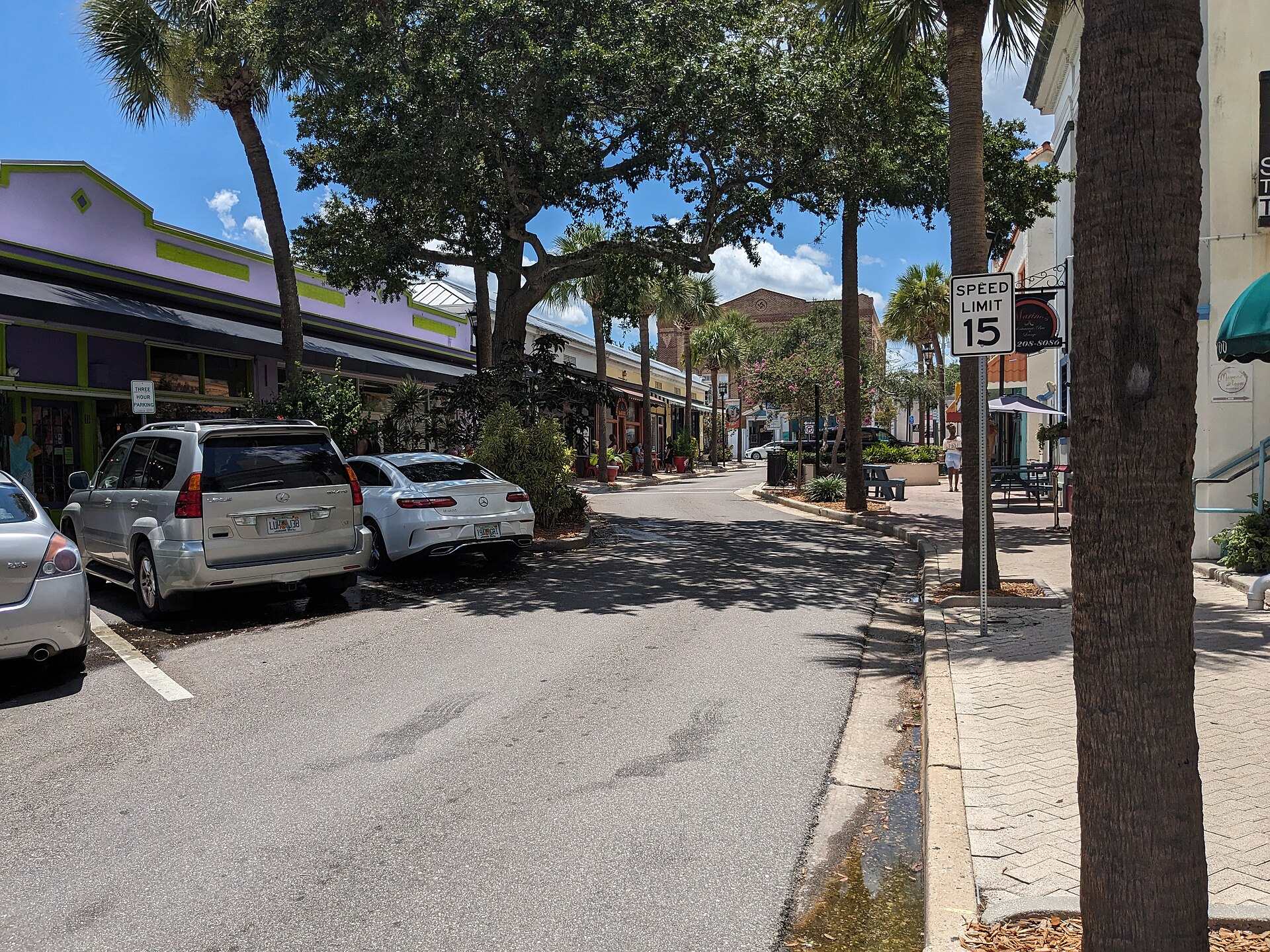
The 1980s revival (its own piece) was driven by restaurants and small specialty retail. A combination of low rents, the historic-district character, and a deliberate marketing push by Cocoa Village Mainstreet turned the district into a regional dining and shopping destination by 1995. The Aladdin reopened in 1991 as a community theater and cinema. By 2000 the district was economically self-sustaining.
The 2008 financial crisis hit Cocoa Village harder than many parts of Brevard County because the restaurant and specialty-retail economy is discretionary spending. Several long-running businesses closed in 2009–2011. The recovery, when it came, was driven partly by an influx of brewpubs, craft retailers, and second-home owners.
What’s protected, what isn’t
Inside the district, the 32 contributing structures cannot be demolished or substantially altered without City of Cocoa Historic Preservation Board approval. Façade changes, signage, awnings, and even paint colors are reviewable. The framework is the typical American local-historic-district regulatory scheme, modeled on Charleston’s 1931 ordinance.
Outside the district, but within the broader Cocoa Village neighborhood, no formal protection applies. Several of the surrounding blocks have lost historic structures in the past 25 years to commercial-redevelopment projects. The district boundary, as drawn in 1986, is the edge of effective protection.
What’s missing from the district
The NRHP listing covers what was standing in 1986. It does not include structures that had already been lost by then. The original 1885 wood-frame S.F. Travis Hardware building (replaced by the 1915 brick structure after a fire); the original 1888 schoolhouse; the 1890s Cocoa wharf complex (demolished in the 1960s for the riverfront park); the first Cocoa Hotel (burned 1919), all gone before the district was nominated.
What you walk through today is the surviving 1900–1935 streetscape, plus a few 1890s holdovers, plus tasteful 1990s infill. It’s not a fully intact frontier-town downtown, because no Florida frontier-town downtown is fully intact. It’s the best-preserved Brevard County commercial historic district, which is the bar that matters.
The architectural mix
The 32 contributing structures span a roughly 50-year period and reflect the construction technologies available in each. The wood-frame holdovers (the 1898 Magruder Building among them) belong to the steamboat-era Cocoa described in the founding article, when lumber was the dominant material because it could be barged in on the Indian River trade. The 1908–1915 expansion brought brick masonry in the Italianate and commercial-vernacular modes typical of railroad-era Florida small-town downtowns. The 1916 Porcher House and the 1924 Aladdin Theatre are the high-style outliers, Classical Revival in coquina and Moorish Revival in stucco, both individually listed on the NRHP because their architectural significance stands on its own beyond the district context.
The 1925–1935 Mediterranean Revival and Mission Revival entries reflect the brief Florida boom-era style that dominated state construction between the land-boom peak and the Depression. Several Brevard Avenue storefronts in that style have stucco facades with red-tile roof parapets, arched window openings, and decorative tilework typical of the 1920s coastal Florida idiom. Cocoa’s version is restrained compared to Miami Beach or St. Petersburg from the same period, which is consistent with the city’s smaller capital base and the freeze-tempered local conservatism that followed the 1894–95 grove disaster.
Sources
- National Register of Historic Places, registration form for Cocoa Village Historic District, NRHP reference 86001245, listed June 5, 1986. Available via National Park Service NRHP database.
- City of Cocoa, historic preservation ordinance (Chapter 5.5 of the city code), adopted 1988 with subsequent amendments.
- Cocoa Village Mainstreet organization, historical records and minutes, 1980–present.
- Florida Master Site File, Florida Division of Historical Resources, Cocoa Village structures.
- Florida Today, preservation coverage 1985–1995.
- City of Cocoa Historic Preservation Board minutes, available via city clerk records.
- U.S. Department of the Interior, Secretary’s Standards for Rehabilitation, 36 CFR Part 67.
Further Reading
As an Amazon Associate we earn from qualifying purchases.