S.F. Travis Hardware, Cocoa, 1885: one of Florida's oldest continuously-operating businesses
Founded in 1885 by Stephen F. Travis on Brevard Avenue, S.F. Travis Hardware has run continuously through four generations of one family. It's older than the City of Cocoa Beach, older than the Florida East Coast Railway south of Daytona, older than Brevard County's current courthouse.
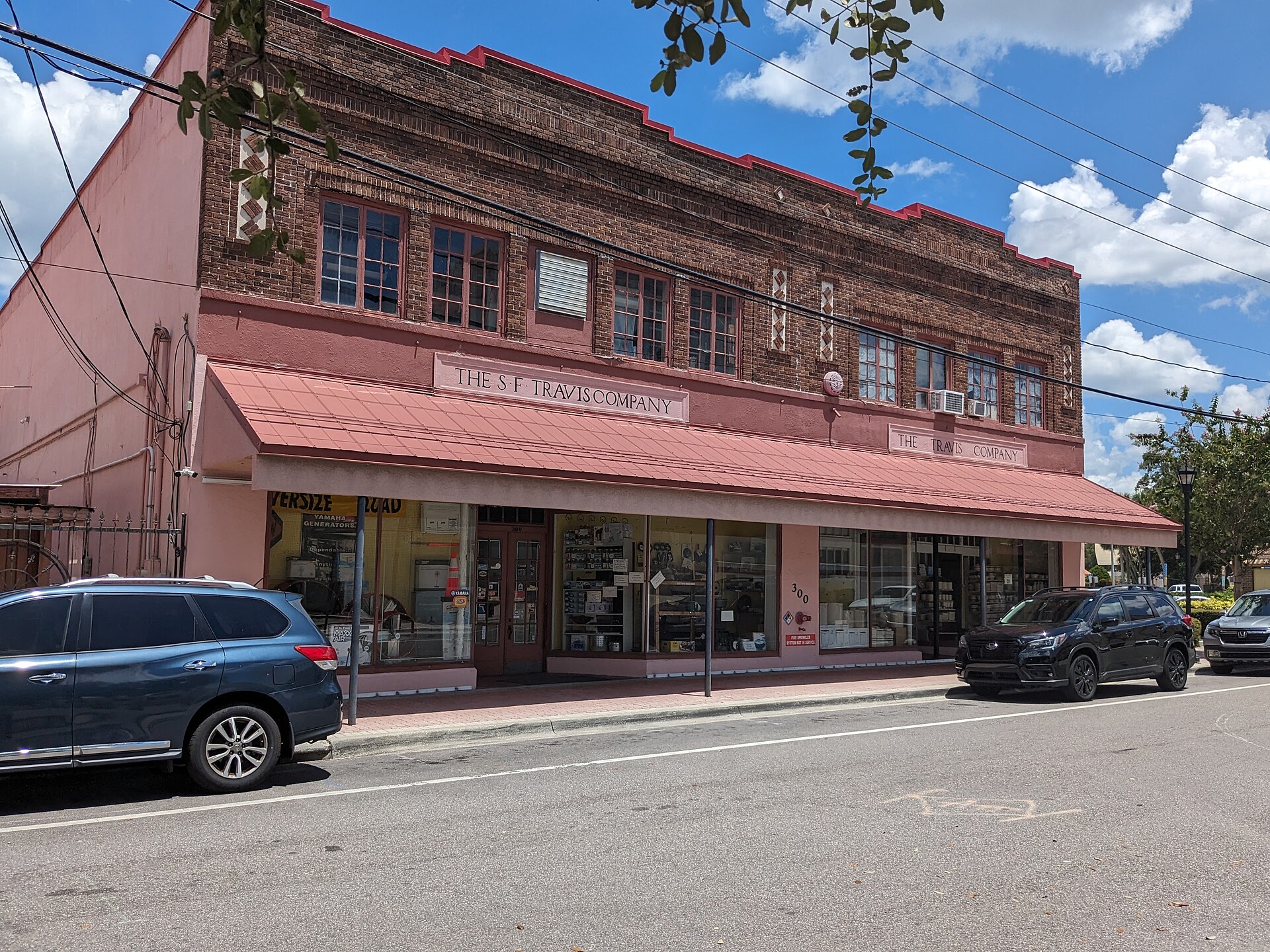
S.F. Travis Hardware has been running on Brevard Avenue in Cocoa since 1885, which makes it older than the Florida East Coast Railway south of Daytona Beach, older than the City of Cocoa Beach by 40 years, and older than the Brevard County courthouse currently standing in Titusville. The store has been in the Travis family across four generations and survived two world wars, the Great Depression, the 1925 land bust, the 1980s downtown deathwatch, and big-box hardware. As of May 2026 it still occupies the same Brevard Avenue address.
You can argue about whether it’s the single oldest continuously-operating hardware store in Florida (the Florida Department of State doesn’t keep that list, and Treadway Hardware in Lake City makes a similar claim from 1885). What’s not disputable is that Travis is one of a handful of Florida retail businesses that have run continuously through four generations of the founding family on the same block.
Who Stephen F. Travis was
Stephen Frederick Travis arrived in Cocoa in 1879 from Sandusky, Ohio. He was 32 years old, a Civil War Union Army veteran (33rd Ohio Volunteer Infantry, enlisted at 18), and looking for a healthier climate after years of recurring respiratory illness, the standard 1870s reason Northerners moved to Florida. He bought a small grove west of town and worked as a freight agent for the early Indian River steamboat lines before opening the hardware store in 1885.
The 1885 opening date is documented in S.F. Travis’s own ledger books (preserved by the family and partially digitized by Florida Memory) and in advertisements in the Indian River Advocate (Titusville) and later in the Cocoa Tribune. The first store was a wood-frame building on what is now the south side of Brevard Avenue near the riverfront wharf. The current brick building dates to 1915, replacing the original after a fire.
What the store sold, by era
1885–1900 (citrus-frontier era). Mostly tools and supplies for grove development: shovels, axes, mule tack, grove pumps, crate nails, and the kind of cookware and stoves that homesteading families needed. The store was a wholesaler as much as a retailer; Travis would order in carload lots and resell to smaller stores in Eau Gallie, Melbourne, and as far south as Fort Pierce.
1900–1925 (railroad boom era). Building hardware. The Florida East Coast Railway’s arrival in 1893 set off a construction boom along the Indian River, and Travis was the supply yard for it. Window glass, paint, nails, hinges, screen wire, plumbing fittings. A 1912 newspaper account in the Cocoa Tribune described a single train-car shipment of paint and putty arriving for Travis weighing 18 tons.
1925–1945 (Depression and war). Survival mode. The 1925 Florida land bust cratered the construction market; Travis stayed afloat by leaning back into the grove-supply business and adding fishing tackle. World War II rationing meant most metal goods were on allocation, but Travis kept the doors open through wartime by selling what they could get.
1945–present. Continuous operation as a general hardware and marine-supply store, with periodic remodels but no closures. The store survived the 1960s and 1970s urban-renewal era that gutted many small-town Florida downtowns, partly because the Travis family owned the building outright and could ride out lean years.
The family ownership chain
| Generation | Name | Years owning |
|---|---|---|
| 1st | Stephen F. Travis | 1885–1923 |
| 2nd | Stephen “Steve” F. Travis Jr. | 1923–1962 |
| 3rd | S.F. “Bud” Travis III | 1962–1996 |
| 4th | S.F. Travis IV and family | 1996–present |
Four generations, one family, 141 years (counting from 1885 to May 2026). The reason this is unusual isn’t that hardware stores can’t last, it’s that family ownership rarely transfers cleanly across four generations without a buy-out, a sale to outside investors, or a generational gap that kills the business. The Travis family kept the line intact, partly because each generation actually wanted to run the store.
What it has, that big box doesn’t
Walk in today and the inventory is the kind of thing a Home Depot stopped stocking around 1995: cut keys, threaded pipe in odd sizes, brass plumbing fittings, individual bolts in bins by the dozen, marine-grade stainless hardware for the boat owners who still come in from Merritt Island and Cocoa Beach.
The store is also functionally an archive. The walls have signed photographs of customers going back to the 1920s. The original 1915 cash register is on display (no longer in use; today’s transactions are handled by modern POS). Old crate stencils from the citrus-era days hang behind the counter, including labels for groves whose families haven’t lived in Cocoa for sixty years.
Why Cocoa Village survived because of stores like this
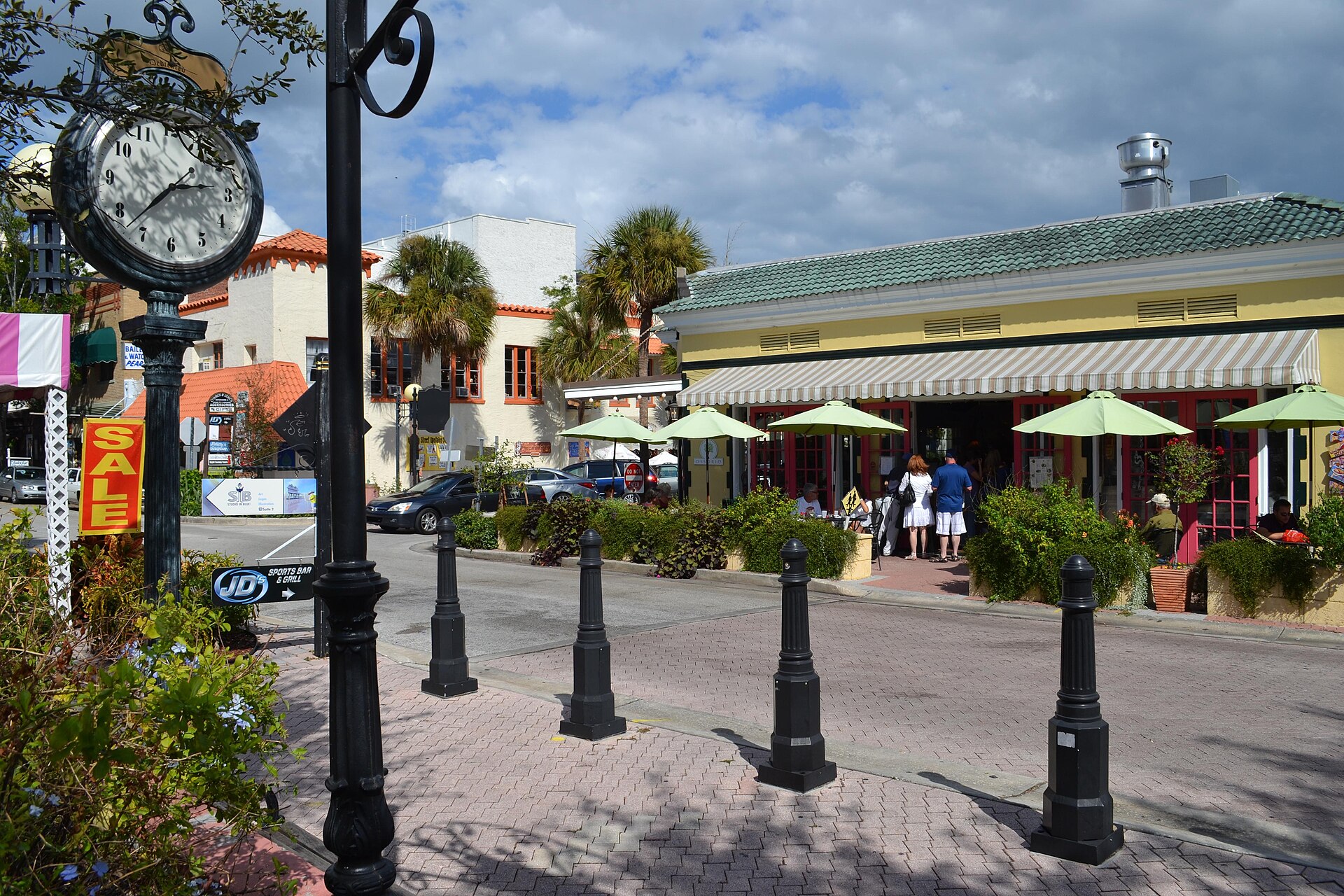
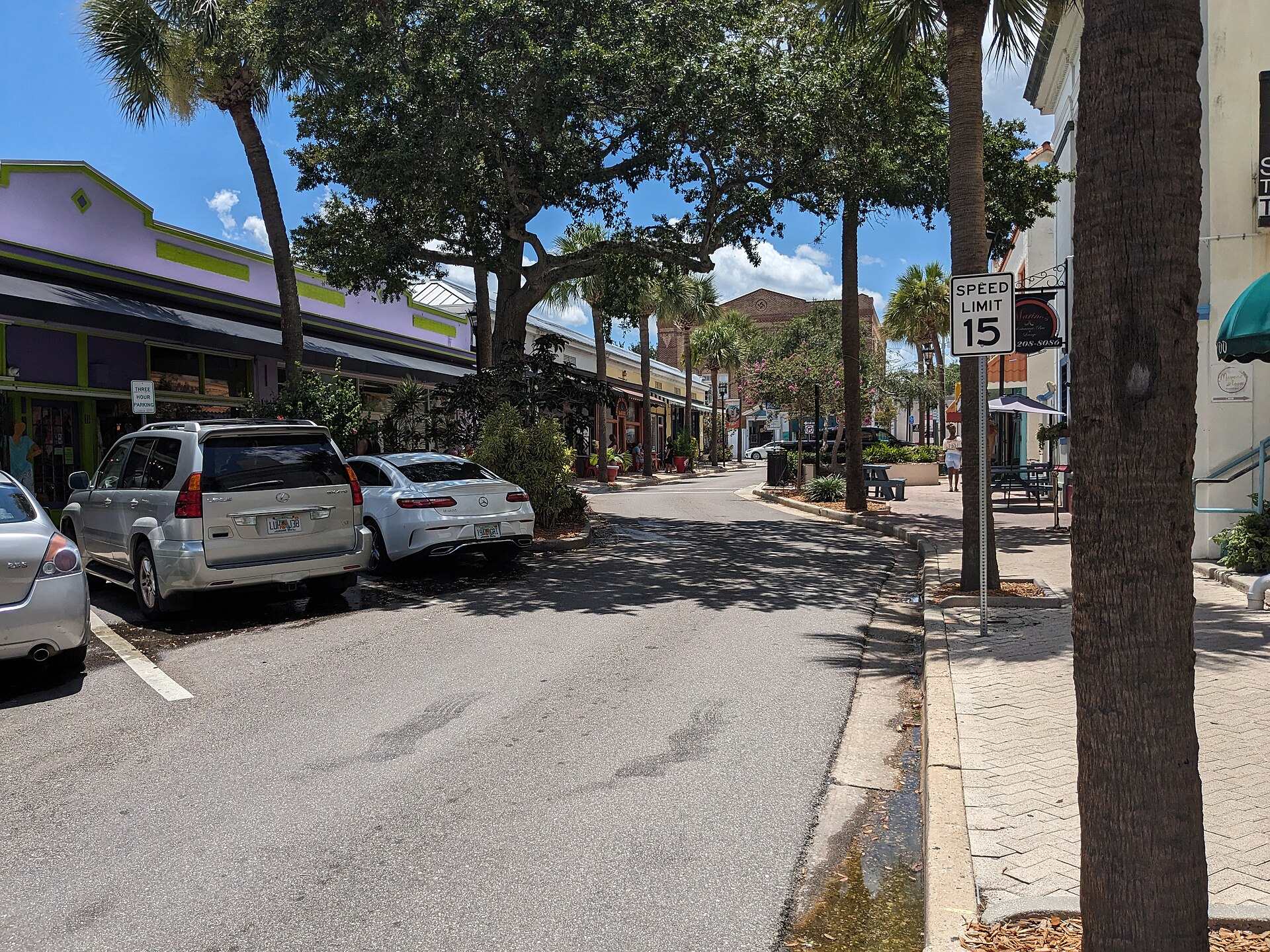
Cocoa Village’s downtown survival is the topic of its own article, but the short version: by the 1970s, downtown Cocoa was on the edge of the same urban-renewal demolition that gutted Titusville, Eau Gallie, and Fort Pierce’s old commercial cores. The buildings on Brevard Avenue and Delannoy were saved by a combination of merchant resistance, the 1986 National Register listing, and the simple fact that several anchor businesses, Travis Hardware among them, refused to move out, refused to sell, and refused to give up the storefronts to demolition planning.
If S.F. Travis Hardware had closed in 1975, the case for keeping the surrounding 1890s and 1910s buildings would have been weaker. It didn’t close. That’s the story.
The Ohio-to-Florida pipeline that brought Travis
Stephen Travis’s move from Sandusky to Cocoa in 1879 fit a documented pattern. After the Civil War, Union veterans suffering chronic respiratory illness, often related to wartime exposure or unrelated tuberculosis, were among the largest cohorts migrating to Florida’s east coast. The 33rd Ohio Volunteer Infantry, Travis’s unit, served in the western theater, including the Atlanta and Carolinas campaigns, with surviving rosters preserved in National Archives Record Group 94. Many of its enlisted men, like Travis, mustered out in 1865 and lived with intermittent illness for the next two decades.
Florida’s east coast became one of the standard destinations for the so-called “health migration” of the 1870s and 1880s, alongside southern California and the Arizona Territory. The Brevard County tax rolls and U.S. Census records for 1880 and 1900 document an unusually high proportion of northern-born residents in Cocoa, Rockledge, and Eau Gallie compared to neighboring inland Florida counties. The Indian River’s reputation, promoted by hotels like the Indian River House (Rockledge, 1885) and later the Hotel Plaza, was that the lagoon’s brackish air and citrus-grove climate eased lung complaints. Whether the medical claim held up is debatable. The migration it produced is documented.
Travis’s freight-agent work between 1879 and 1885 put him in the center of the lagoon-era economy. The job of an Indian River freight agent in those years was to coordinate steamboat shipments for grove owners, including the Magruders, Sanders, and Travises themselves, who didn’t have the volume to negotiate directly with the Indian River Steamboat Company. The freight-agent role meant Travis knew exactly what every grove operator needed for tools, hardware, and supplies, because he was already loading their fruit. Opening a hardware store in 1885 was a vertical-integration move into a market he understood from years of brokering it. By 1893, when the Florida East Coast Railway reached Cocoa and the steamboat business began winding down, Travis’s hardware operation had already replaced the freight-agent role with a more durable model: direct retail to grove owners on rail-delivered carload-lot inventory.
Further Reading
- Pioneer Life in Southeast Florida by Charles W. Pierce
- A Land Remembered by Patrick D. Smith
- Florida: A Short History by Michael Gannon
Sources
- S.F. Travis Hardware company history, official store records.
- Indian River Advocate (Titusville), 1885–1910, advertisements and store notices (microfilm via University of Florida Digital Collections).
- Cocoa Tribune, 1908–1950, weekly editions (microfilm via Brevard County Library System).
- Florida Memory Project, State Archives of Florida, Travis family papers (partial).
- U.S. Census, 1880, 1900, 1910, 1920, Travis household records.
- National Register of Historic Places, Cocoa Village Historic District nomination, NRHP reference 86001245, listed June 5, 1986.
- Civil War service records, 33rd Ohio Volunteer Infantry, National Archives Record Group 94.
- U.S. Census, Brevard County, Florida, 1880 and 1900, place-of-birth schedules documenting northern-born residents.
- Indian River Steamboat Company freight schedules and agent records, 1882–1898 (partial, via Florida Memory Project).
As an Amazon Associate we earn from qualifying purchases.